
Nourishing Roots
(MFA Thesis)
A food heritage wellness platform and storytelling tool co-designed with community members and health advocates of the US Chinese diaspora. It empowers people of Chinese descent to preserve and cultivate traditional food knowledge, connect with cultural roots, and strengthen collective wellbeing—all while challenging mainstream narratives.
Hats Worn:
Visual Designer
Design Researcher
Design Strategist
Facilitator
Hats Worn:
Lona Vincent, DSI Thesis Advisor
Mari Nakano, DSI Faculty & Advisor
Miya Osaki, DSI Program Chair
Challenge:
San José Public Library has been a national leader in outcomes-based educational programming and digital equity for nearly two decades. But as the city approaches 1 million residents and continues to evolve as one of the nation's most diverse communities, SJPL needed a comprehensive facilities plan that could guide the next 20 years of growth. The challenge was creating a flexible roadmap that honors each branch's unique neighborhood context and cultural identity while establishing a cohesive systemwide investment strategy—ensuring facilities can adapt and flex to support SJPL's innovative service model and the community's changing needs.
APPROACH:
I designed and co-created Nourishing Roots—a comprehensive digital platform with physical components that empowers Chinese diaspora communities to preserve traditional food knowledge, connect with cultural roots, and strengthen collective wellbeing. Through extensive community-centered research and co-design, I developed three interconnected interventions: visual food guides centering Traditional Chinese Medicine, a cultural dish spotlight series destigmatizing traditional foods, and an intergenerational card game preserving family food wisdom. The platform creates accessible, culturally-responsive nutrition tools that honor traditional healing practices while challenging Western food hierarchies.

If interested in a detailed journey through this project, click on the image below to access a PDF of the complete research and design process.

25
STAKEHOLDER INTERVIEWS
3
CO-DESIGN WORKSHOP ACTIVITIES
1
CULTURAL POTLUCK PROTOTYPE WITH 20+ COMMUNITY MEMBERS
3
co-designed intervention prototypes
100+
SURVEY RESPONSES SYNTHESIZED
Key Inquiry Areas
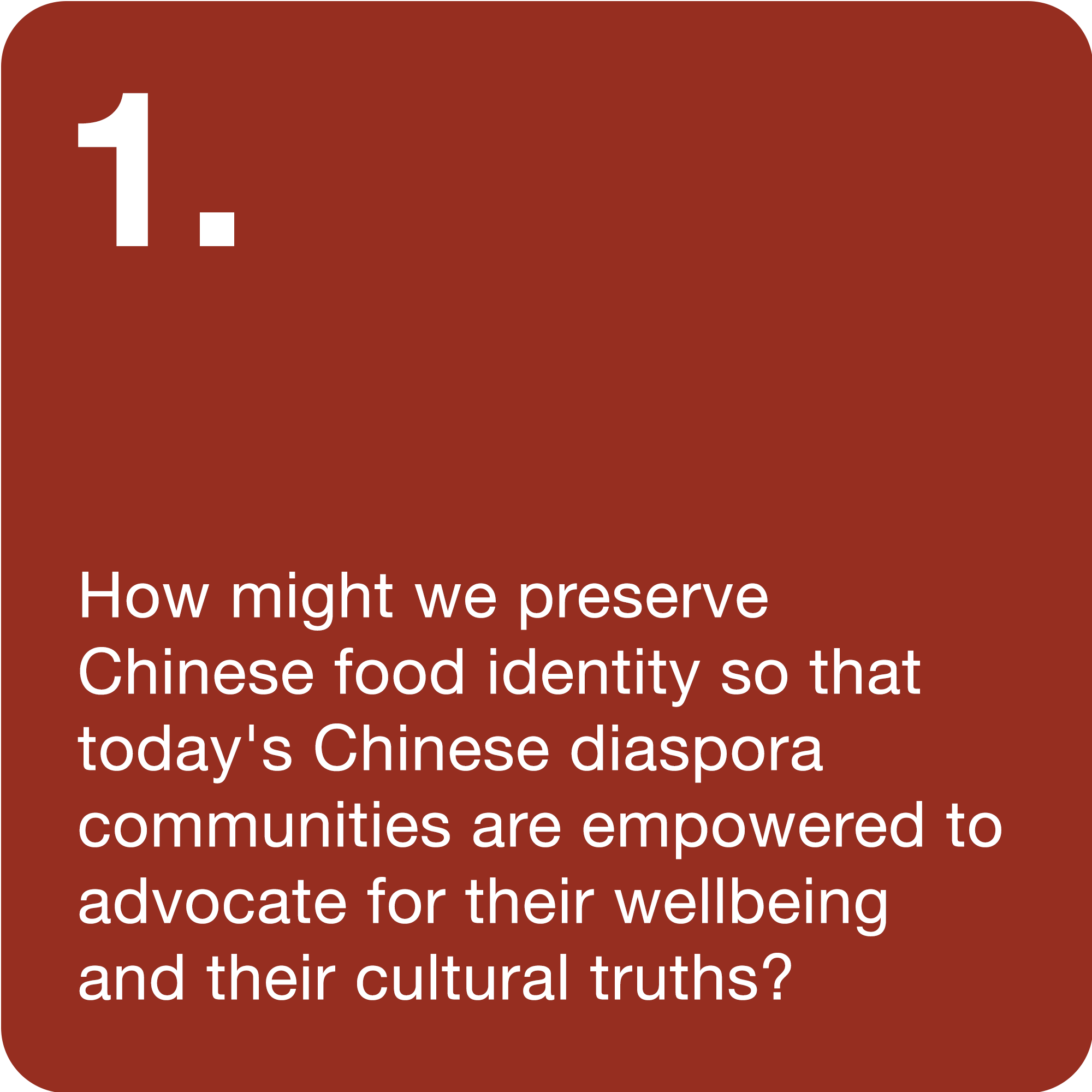
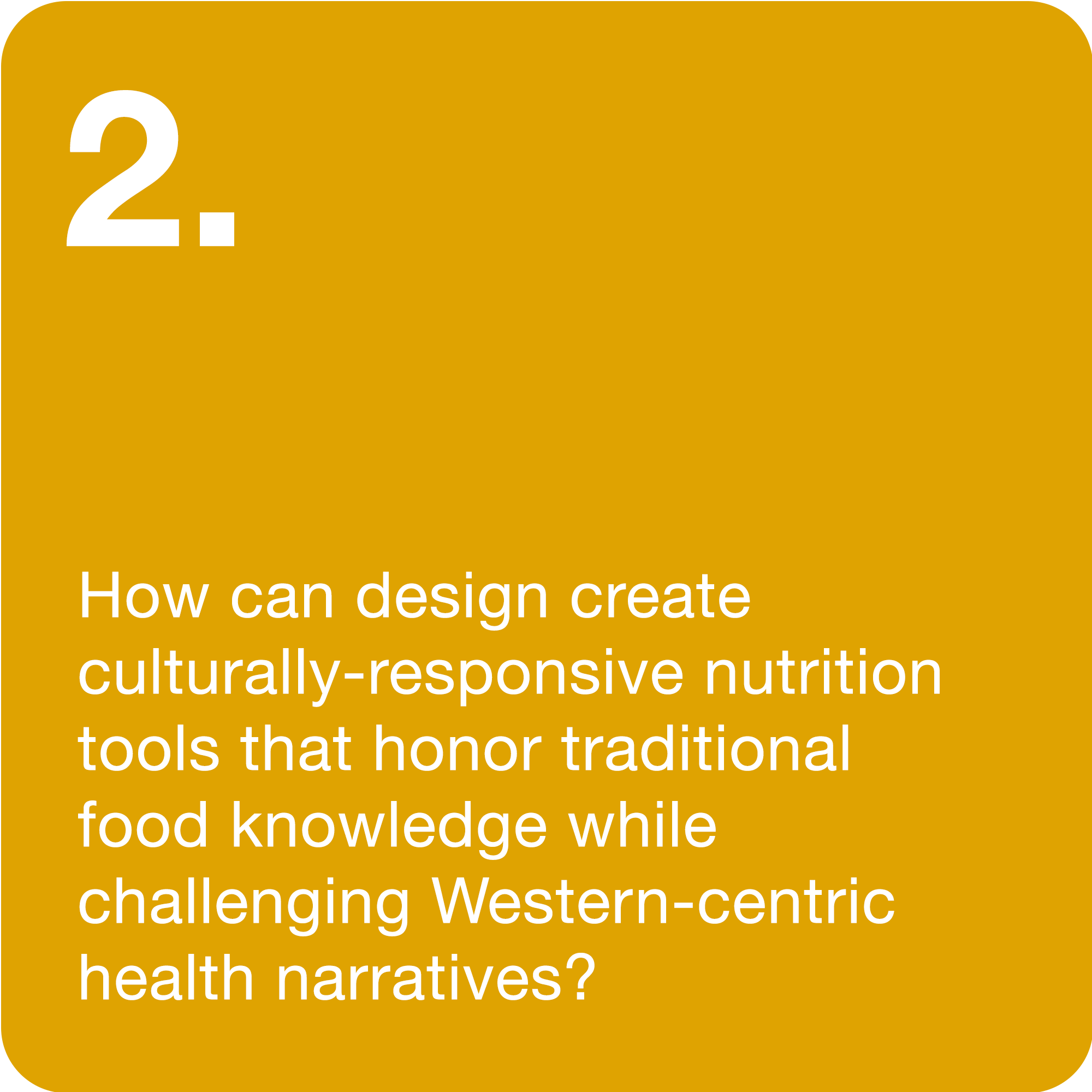
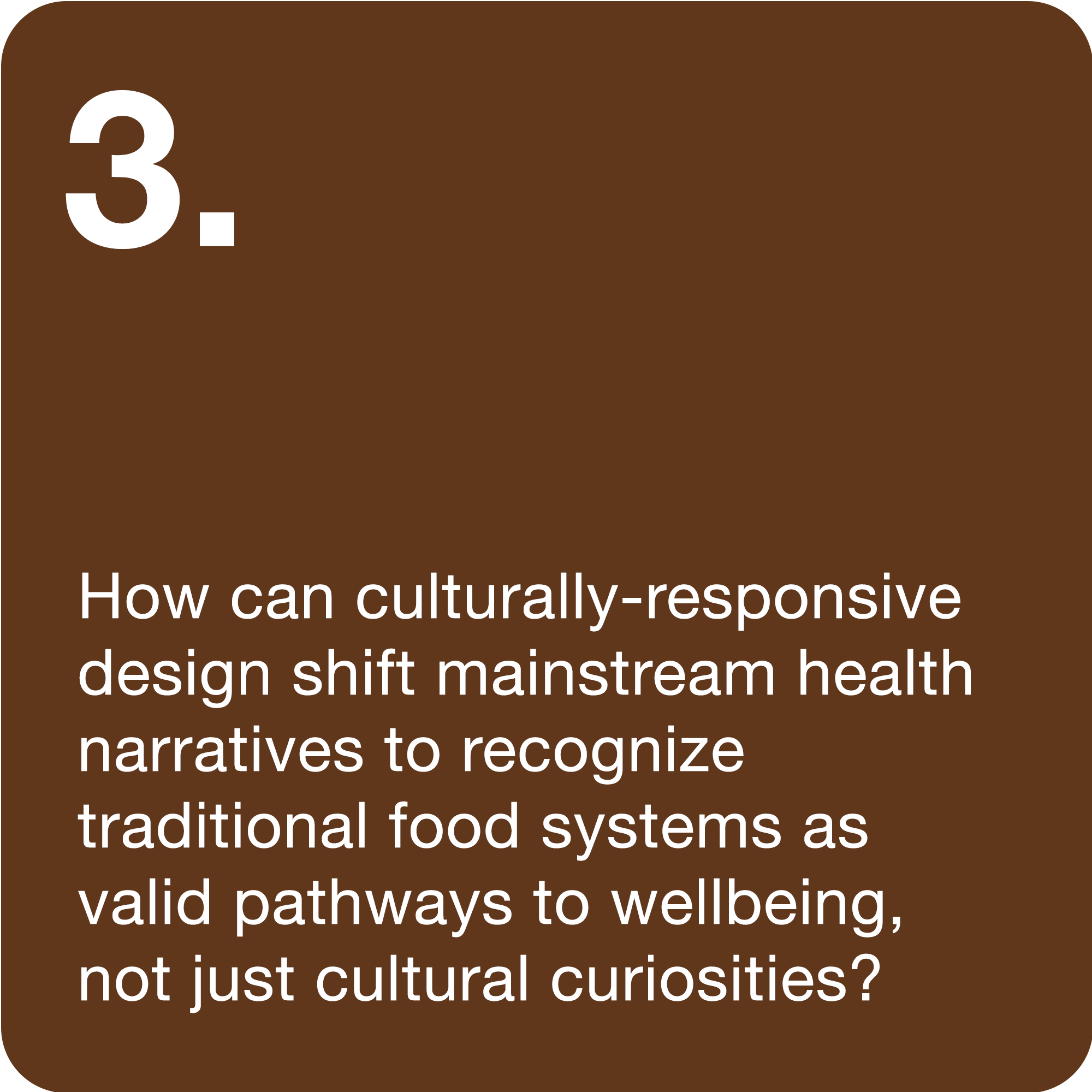

RESEARCH & DISCOVERY
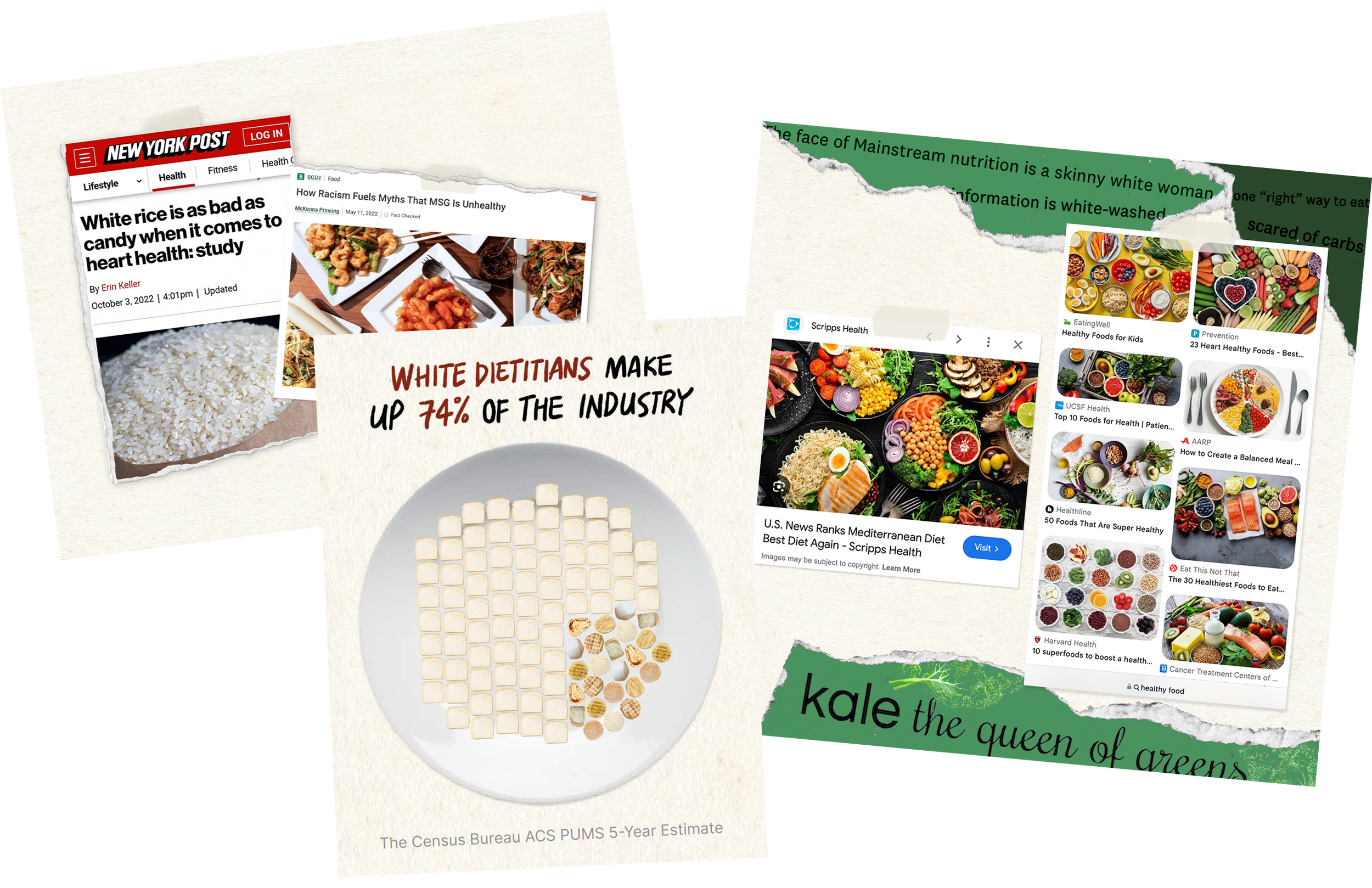
I examined the landscape of Asian American experiences, cultural food practices, and health disparities to establish a strong foundation for the project.
Key Findings:
Asian Americans are the fastest-growing US demographic (21.1M people, 600,000 in NYC alone)
74% of dietetics practitioners are white, creating barriers to culturally-competent care
Western-centric nutrition advice overlooks healthy cultural food traditions
Food stigmatization creates shame and disconnection from heritage
There is a strong desire for culturally-relevant nutrition resources
UNDERSTANDING THE LANDSCAPE:
STAKEHOLDER PERSPECTIVES

I conducted 25 in-depth interviews with diverse stakeholders including registered dietitians of color, Chinese diaspora community members (international students, amateur cooks, restaurant managers), mental health counselors, and nonprofit strategists.
takeaways from nutrition experts:
Visual tools are powerful but culturally limited—existing food models are American-centric
Cultural food information is poorly archived, forcing practitioners to create their own libraries
Food-related trauma requires therapeutic approaches in nutrition counseling
takeaways FROM COMMUNITY MEMBERS:
Assimilation pressures create distance from traditions before purposeful identity exploration
Barriers to preserving dishes center on lacking generational knowledge transfer
Strong desire for relatable resources: nutrition guides, meal plans, food glossaries
Motivations rooted in preserving intergenerational stories and challenging assumptions


“I currently manage my family's Chinese restaurant (specializing in HK BBQ) in Philadelphia... and I've heard nearly everything someone could say about Chinese cuisine in the US. From what is and isn't healthy to what foods we should or shouldn't have and even how something should be cooked (because we did it "wrong").”
– Survey Respondent
I created an online survey exploring US Chinese diaspora community members' relationship with cultural foods and experiences with nutrition advice.
81% found it helpful for nutrition guidance to feature Chinese ingredients and cooking methods
64% reported cultural factors influence their self-care methods
88% believed integrating Traditional Chinese Medicine concepts would resonate with them
81% believed adapted traditional recipes would motivate healthier choices


SYNTHESIS & STRATEGIC FRAMING
I synthesized insights through ecosystem mapping and conducted analogous research (see below) to explore broader dimensions of "healing" beyond healthcare—examining concepts like revival, preservation, cultural practices, and resilience.
These insights provided a valuable framework for approaching cultural food heritage, contextualizing the loss of traditional lifeways, and developing interventions that could promote healing through cultural reconnection.
Key principles emerged from synthesis:
Making visible
Preserving
Bridging
Combining
Layers


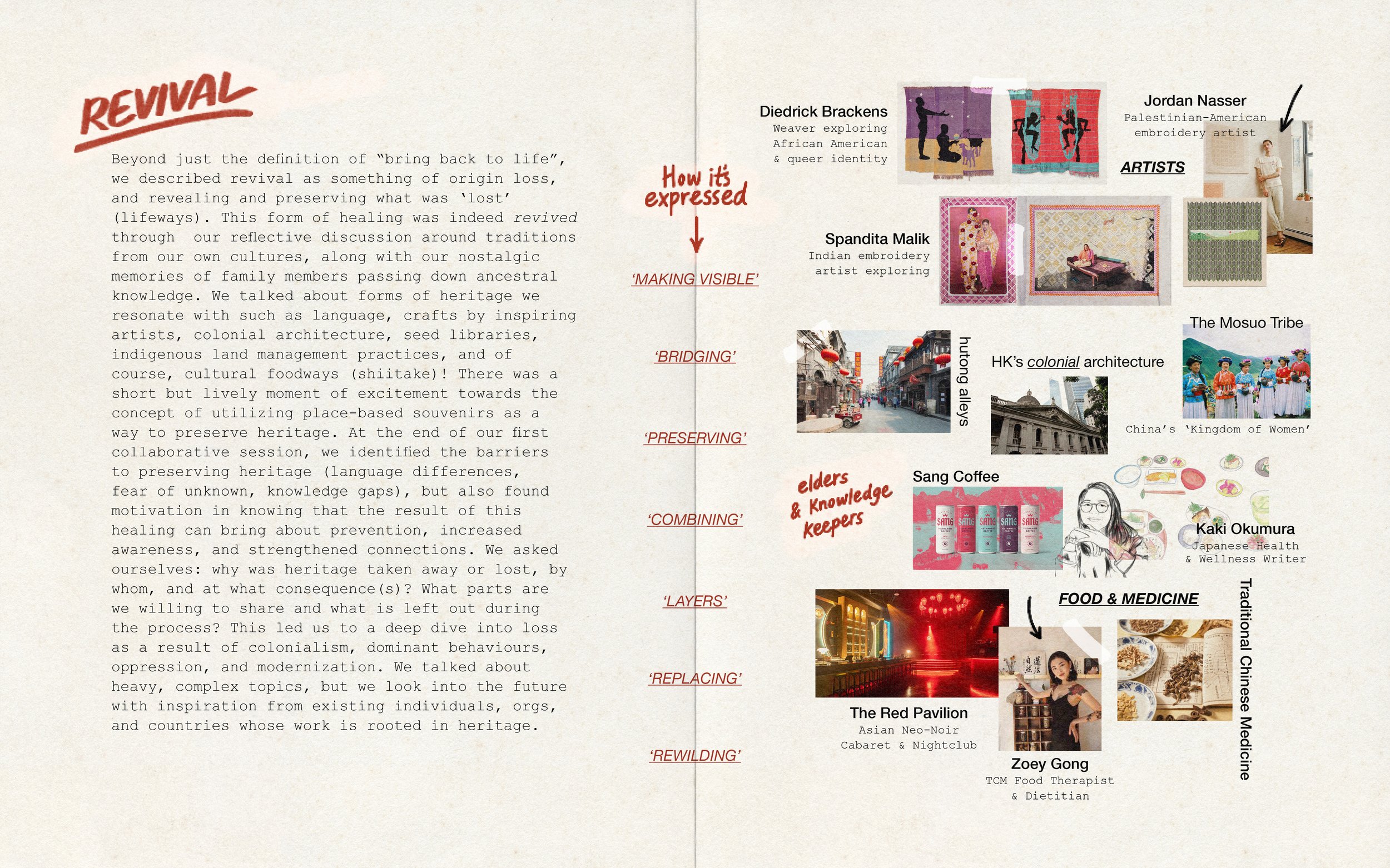


Through comprehensive research, stakeholder engagement, and insights synthesis across multiple perspectives, I was able to refine my challenge into a focused design statement that would guide the remainder of my thesis work.
IDEATION & CONCEPT DEVELOPMENT
I brainstormed concepts based on community needs and conducted comparative analysis of visual food guides worldwide to inform culturally-relevant design.
PROTOTYPE directions:
Chinese-centered visual food guides inspired by Traditional Chinese Medicine
Storytelling platforms to capture and celebrate food memories
Intergenerational tools to preserve family food wisdom


CO-DESIGNING & PROTOTYPE TESTING
WITH COMMUNITY

I collaborated with a classmate to facilitate a cultural potluck where participants brought dishes with personal significance. Guest speaker Mari Nakano led a meaningful ritual of offering food to ancestors. Recipe cards captured stories behind each dish.
KEY INSIGHTS:
Food is an effective catalyst for community building, cultural exchange, and personal reflection
Recipe cards created tangible archives demonstrating how to document and celebrate diverse food heritage


To deepen my prototypes and ensure they resonated with the community and effectively addressed their needs, I facilitated a co-design workshop with Chinese diaspora members structured around three pillars: healing, celebrating, and preserving heritage.


ACTIVITY 1: HEALING
Goal: to spotlight Chinese food heritage and its power to heal and strengthen communities
Participants explored diverse visual nutrition guides from around the world to inform the development of a culturally relevant guide for Chinese diaspora communities. In groups, they annotated laminated food guides with dry-erase markers, discussing effective elements, missing aspects, and cultural representation. After critique, each group designed their ideal Chinese food guides, incorporating insights from their discussions and prioritizing cultural relevance, accessibility, and nutritional guidance.
Teams designed rough concepts for ideal Chinese-attuned food guides.

ACTIVITY 2: CELEBRATING
Goal: to spotlight Chinese food heritage and its power to heal and strengthen communities
Participants selected significant Chinese dishes with healing properties, then documented personal stories and memories using templates. They explored how these dishes provided physical and emotional nourishment while connecting them to their cultural roots. After sharing their stories, the group collaborated on designing a community platform section to showcase these healing dishes, considering content types, organization, and interactive features.
Stories revealed emotional connections and cultural significance of traditional foods.
The group envisioned how to structure a community platform to showcase these stories.

ACTIVITY 3: PRESERVING
Goal: to preserve Chinese food heritage through sparking meaningful conversations and capturing precious food wisdom
Participants engaged with a card game concept designed to preserve Chinese food heritage by sparking meaningful intergenerational conversations. After learning about the game's purpose—uncovering cherished recipes, traditions, and family food knowledge—small groups tested question prompts while sharing their own family food stories. They reflected on the memories and emotions evoked, providing feedback to refine the game and ensure it resonated with their cultural experiences and needs.
Feedback helped refine questions to better resonate with cultural experiences.
Discussion revealed the power of guided conversation in uncovering food traditions.
outcomes

Bringing together all components, I developed Nourishing Roots as a comprehensive digital platform with physical components that address the needs identified throughout my research.
Nourishing Roots is a food heritage wellness platform and storytelling tool that empowers people of Chinese descent to preserve and cultivate traditional food knowledge, connect with cultural roots, and strengthen collective wellbeing—all while challenging mainstream narratives.

Under the ‘healing’ component is the first iteration of a Chinese-centered visual food guide, co-designed with Chinese diaspora community members, was created to build understanding of traditional foods' benefits while equipping health practitioners with culturally-responsive tools.
It incorporates Traditional Chinese Medicine principles and cultural healing practices.

Under the ‘celebrating’ component is a storytelling series destigmatizing stereotypes by showcasing healing traditional foods, helping the Chinese community recognize strengths in their culinary heritage while facilitating knowledge exchange.

The goal is to uncover cherished recipes, traditions, and family food knowledge—strengthening communication between generations.
Under the ‘preserving’ component is an intergenerational card game preserving Chinese food heritage by sparking meaningful conversations about food rituals.

MEASURING IMPACT

I developed a Theory of Change model to measure the impact of my intervention, which, measures success through increased acceptance and integration of traditional Chinese food as a pathway to health, empowering the Chinese diaspora to guide their wellbeing while preserving cultural identity.
The platform addresses the erasure of generational knowledge caused by Western-centric nutrition advice through three interconnected interventions operating across individual, interpersonal, and community levels:
Co-created Chinese-centered visual food guides build understanding of traditional foods' benefits while equipping health practitioners with culturally-responsive tools.
The dish spotlight series destigmatizes stereotypes by showcasing healing traditional foods, helping the community recognize strength in their culinary heritage while facilitating knowledge exchange.
The intergenerational card game stimulates family conversations about food rituals, improving communication between generations and strengthening relationships.
These pathways assume families desire to learn together when appropriately engaged and that highlighting community excellence can shift media and policy perspectives. By rebuilding generational bonds, the platform aims to revitalize protective practices embedded in traditional Chinese foodways.
Success will manifest as increased access to culturally-responsive nutrition tools, greater representation in mainstream spaces, and community members empowered to reconnect with their roots, advocate for their wellbeing, and challenge Western narratives.
I also developed a comprehensive monitoring framework (M&E plan) to assess the intervention's effectiveness in increasing acceptance and integration of traditional Chinese food.
This evaluation approach will track progress toward project goals, inform data-driven improvements, and demonstrate how the platform empowers the Chinese diaspora to reclaim their food heritage, improve wellbeing, and challenge dominant narratives that overlook traditional wisdom.

FINAL REFLECTIONS

This thesis journey transformed my understanding of social design and my own cultural identity. The heart of this project has been the conversations with Chinese diaspora members—each interaction revealing stories of resilience, courage, and dreams that deserve celebration.
Coming from a traditional design background, I navigated the shift to social design research, learning to prioritize community building and ensuring work is truly community-driven. I developed greater sensitivity in discussing food and cultural identity, creating safe spaces for sharing personal stories.
On a personal level, this journey strengthened my connection to my food heritage. Conversations with community members led me to explore new cooking techniques and traditions, bringing me closer to my 婆婆 (grandmother) who passed away in 2020, through culinary knowledge passed down to my mother. I now feel more confident sharing our cultural cuisine without reservation.
While there is still much work to be done, I hope these research insights, prototypes, and learnings will inspire further community building, care, and resilience. The connections I've made and the stories I've heard will continue to fuel my commitment as a social designer creating meaningful change.